
What Is FemiCore Used For?
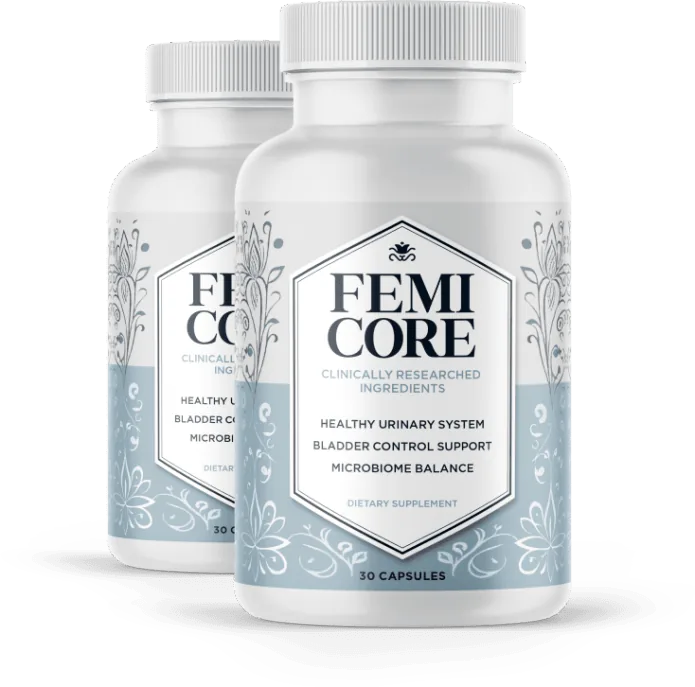
FemiCore is used for bladder and urinary health in women. In practice that means three things the label spells out: a healthy urinary system, bladder control support and microbiome balance. Women take it to have fewer urgent trips and leaks, to go longer between urinary flare-ups, and to rebuild the protective Lactobacillus flora that antibiotics, menopause and hormonal change deplete. It is a dietary supplement, so it is used for daily support and prevention rather than to treat an active condition. This page explains each use, who it suits, and what it is not for.
Key takeaways
- Primary use: daily support for bladder urgency, frequency, night-time urination and occasional leaks.
- Secondary use: helping women with recurring urinary discomfort go longer between flare-ups.
- Also used for: vaginal and urinary microbiome balance, especially after antibiotics or during menopause.
- Not used for: treating an active UTI, severe incontinence, or as a replacement for medical care.
The 5 Main Uses of FemiCore
1. Bladder urgency and frequency
The most common reason women buy FemiCore is the "gotta go now" feeling and needing the bathroom far more often than they would like. An irritated, out-of-balance urinary tract is a frequent driver of that urge, so the formula pairs cranberry PACs, bearberry and berberine, which discourage unwanted bacteria, with five Lactobacillus strains that restore the protective flora. What users notice is being able to finish a drive or a meeting without planning around a bathroom. Improvement typically appears after 6–10 weeks; see FemiCore bladder control.
2. Occasional leaks
Small leaks when laughing, coughing, sneezing or exercising are common after childbirth and after menopause. FemiCore is used as a daily supplement alongside pelvic-floor exercises to reduce the irritation that makes leaks more likely. It does not strengthen muscle, so it is a support for stress leaks rather than a treatment, and it is not meant for severe incontinence.
3. Recurring urinary tract discomfort
Women who get repeated bouts of urinary discomfort use FemiCore between episodes as a preventive routine. Cranberry extract standardized to 30% proanthocyanidins helps discourage E. coli from attaching to the bladder wall, while berberine, bearberry and mimosa pudica add traditional antimicrobial support. This is the use with the strongest ingredient research, and the benefit is measured in flare-ups that do not happen. More in FemiCore for UTI.
4. Feminine microbiome balance
A healthy vaginal microbiome is dominated by Lactobacillus crispatus. Antibiotics, hormonal changes and age deplete it, opening the door to recurring urinary and vaginal problems. FemiCore's five-strain probiotic blend is used to restore that protective balance, so that improvements hold rather than fade after each course of antibiotics. The strains are explained in FemiCore Lactobacillus.
5. Night-time urination (nocturia)
Getting up two or three times a night is one of the most frequently mentioned problems in FemiCore reviews, and "down to once a night" is one of the most frequently mentioned results. Sleeping through is, for many women, the benefit that matters most.
Who Uses FemiCore?
- Women over 40 noticing bladder changes with perimenopause and menopause.
- Mothers dealing with post-pregnancy leaks and urgency.
- Women with a history of recurring UTIs who want a non-antibiotic daily routine.
- Active women who want to run, lift or do yoga without worrying about leaks.
- Anyone who has just finished antibiotics and wants to rebuild feminine flora.
What FemiCore Is Not Used For
FemiCore is not an antibiotic, a hormone replacement, a weight-loss product or a menopause symptom formula. It will not treat an active infection with burning, fever or blood in the urine, and it is not a substitute for a doctor's evaluation of persistent incontinence. If you are unsure whether your symptoms are something a supplement can support, speak to a clinician first.
How FemiCore Is Taken
Take 1 capsule daily with a glass of water, ideally each morning and with food if you have a sensitive stomach. Use it consistently for at least 60 days; most users see the clearest benefit after 2–3 months. Each bottle is a 30-day supply. Details on results and timelines are in does FemiCore really work, and safety information is in FemiCore safety.
FemiCore vs Other Options
| Option | Best for | Limitations |
|---|---|---|
| FemiCore | All-in-one daily support for urgency, leaks, recurring discomfort and microbiome | Premium price; results in 6–12 weeks; online only |
| Cranberry capsules | Budget prevention of recurring discomfort | Many products under-dosed in PACs; no bladder-control or probiotic support |
| D-mannose powder | Higher-dose anti-adhesion support | Single mechanism; mixing powder daily; no probiotic |
| Women's probiotic | Vaginal flora balance | No anti-adhesion or bladder-comfort ingredients |
| Prescription treatment | Active infections, diagnosed overactive bladder, severe incontinence | Requires a doctor; side effects; not preventive |
Side-by-side comparisons are in FemiCore vs cranberry pills and FemiCore D-mannose. Packages and the guarantee are listed on the FemiCore cost page.

60-day money-back guarantee · Bottles from $49 · Ships to US, CA, UK, IE, AU, NZ
FemiCore Uses FAQ
Is FemiCore for UTIs?
FemiCore is used to support urinary tract health and reduce the recurrence of discomfort. It does not treat an active infection.
Is FemiCore for menopause?
Not directly. It does not contain hormones or menopause herbs. Many menopausal women use it for the bladder changes that come with lower estrogen, which is a related but different purpose.
Can men take FemiCore?
FemiCore is formulated for women, particularly the Lactobacillus crispatus strain that supports the vaginal microbiome. Men looking for urinary support should look at products formulated for prostate and male urinary health.
Is FemiCore a probiotic?
Partly. It contains a five-strain Lactobacillus probiotic blend, but it is primarily a urinary-health formula that also includes cranberry PACs, berberine, bearberry and mimosa pudica.