
FemiCore vs AZO: Which Is Better for Bladder Control and Urinary Health?
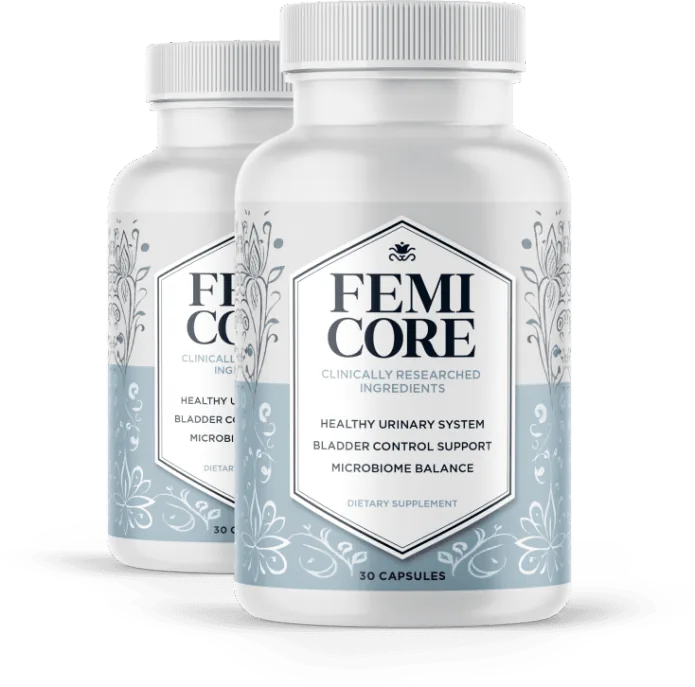
AZO is the brand most women already know from the pharmacy shelf, so it is the natural comparison for FemiCore. The two are built differently. AZO sells several single-purpose products, each aimed at one problem. FemiCore is one capsule that combines cranberry, antimicrobial botanicals and probiotics. Which is better depends on what you are trying to fix. This comparison covers the three AZO products people usually have in mind.
AZO formulas change from time to time; check the current label in store before buying.
The products being compared
| Product | What it is for | Key ingredients |
|---|---|---|
| AZO Bladder Control | Leaks and urgency | Pumpkin seed extract and soy germ isoflavones (the "Go-Less" blend) |
| AZO Cranberry | Urinary tract health | Cranberry powder concentrate, often with vitamin C |
| AZO Urinary Pain Relief | Short-term relief of burning and urgency during a UTI | Phenazopyridine, an over-the-counter analgesic drug |
| FemiCore | Urinary system, bladder control and microbiome balance | Cranberry extract (30% PACs), bearberry, berberine, mimosa pudica + 5 Lactobacillus strains |
FemiCore vs AZO Bladder Control
These two take opposite routes to the same goal.
- AZO Bladder Control works on the bladder muscle and pelvic floor. Pumpkin seed extract with soy isoflavones has small human studies showing fewer daytime trips and less night-time urination after several weeks.
- FemiCore works on irritation and the microbiome. It contains no pumpkin seed or soy, and nothing that acts directly on muscle.
Choose AZO Bladder Control if your main issue is urgency or mild leaks with no history of infections, and you want something inexpensive that you can buy today. Note that it contains soy.
Choose FemiCore if urgency comes with recurring urinary discomfort, started after antibiotics or menopause, or you also want vaginal microbiome support. See FemiCore bladder control.
FemiCore vs AZO Cranberry
Both rely on cranberry, but the detail matters. The compounds that stop E. coli attaching to the bladder wall are proanthocyanidins (PACs), and studies that showed a benefit delivered roughly 36 mg of PACs a day.
- FemiCore's label states its cranberry extract is standardized to 30% PACs.
- Many cranberry tablets, including mainstream ones, state the amount of cranberry concentrate rather than the PAC content, which makes them harder to judge.
FemiCore also adds berberine, bearberry and probiotics; AZO Cranberry is cranberry with vitamin C. On the other hand AZO costs a fraction of the price. More in FemiCore vs cranberry.
FemiCore vs AZO Urinary Pain Relief
This is not a real contest, because they do different jobs. AZO Urinary Pain Relief is a drug that numbs the urinary tract for a day or two while you wait for an antibiotic to work. It does not treat or prevent infection, it turns urine orange, and it is meant for no more than two days without medical advice. FemiCore is a daily supplement for long-term support and does nothing for acute pain. If you have burning or pain, see a doctor.
Price and convenience
| AZO (per product) | FemiCore | |
|---|---|---|
| Typical monthly cost | $10–$25 | $49–$79 depending on package |
| Where to buy | Pharmacies, supermarkets, online | Official order page only |
| Delivery | Same day in store | 5–7 working days (US) |
| Doses per day | 1–2 | 1 |
| Guarantee | Store return policy | 60 days from delivery; bottles must be returned |
| Probiotics included | No | Yes, five strains |
Buying AZO Bladder Control, AZO Cranberry and a separate women's probiotic together narrows the price gap considerably and means three products a day instead of one.
Which has better evidence?
Neither brand's finished product has large independent trials. AZO Bladder Control rests on small studies of its pumpkin seed and soy blend. FemiCore rests on ingredient-level research: a Cochrane review for cranberry products and a placebo-controlled trial for Lactobacillus crispatus. Both are "plausible, modestly supported" rather than proven. Our full review is in FemiCore effectiveness.
Can you take FemiCore with AZO?
- With AZO Bladder Control: generally yes. The ingredients do not overlap and target different causes.
- With AZO Cranberry: unnecessary, since FemiCore already contains a standardized cranberry extract.
- With AZO Urinary Pain Relief: no known interaction, but pain means you should be seeing a doctor.
Check with a pharmacist if you take regular medication; berberine and cranberry can interact with diabetes drugs and warfarin.
Verdict
AZO wins on price, availability and, for pure bladder-muscle symptoms, on having an ingredient aimed at the muscle. FemiCore wins on breadth: it is the only one of the four that addresses the microbiome, and its cranberry extract is standardized. For occasional urgency, start with AZO. For recurring urinary discomfort with urgency, particularly after menopause or antibiotics, FemiCore is the more complete option. Packages and the guarantee are on our FemiCore price page.
This article is for information only and is not medical advice. AZO is a trademark of its owner; this site is not affiliated with AZO.

60-day money-back guarantee · Bottles from $49 · Ships to US, CA, UK, IE, AU, NZ